Published by Sue Johns-Chapman
Published Date 22.09.2026
Published by Sue Johns-Chapman
Published Date 22.09.2026 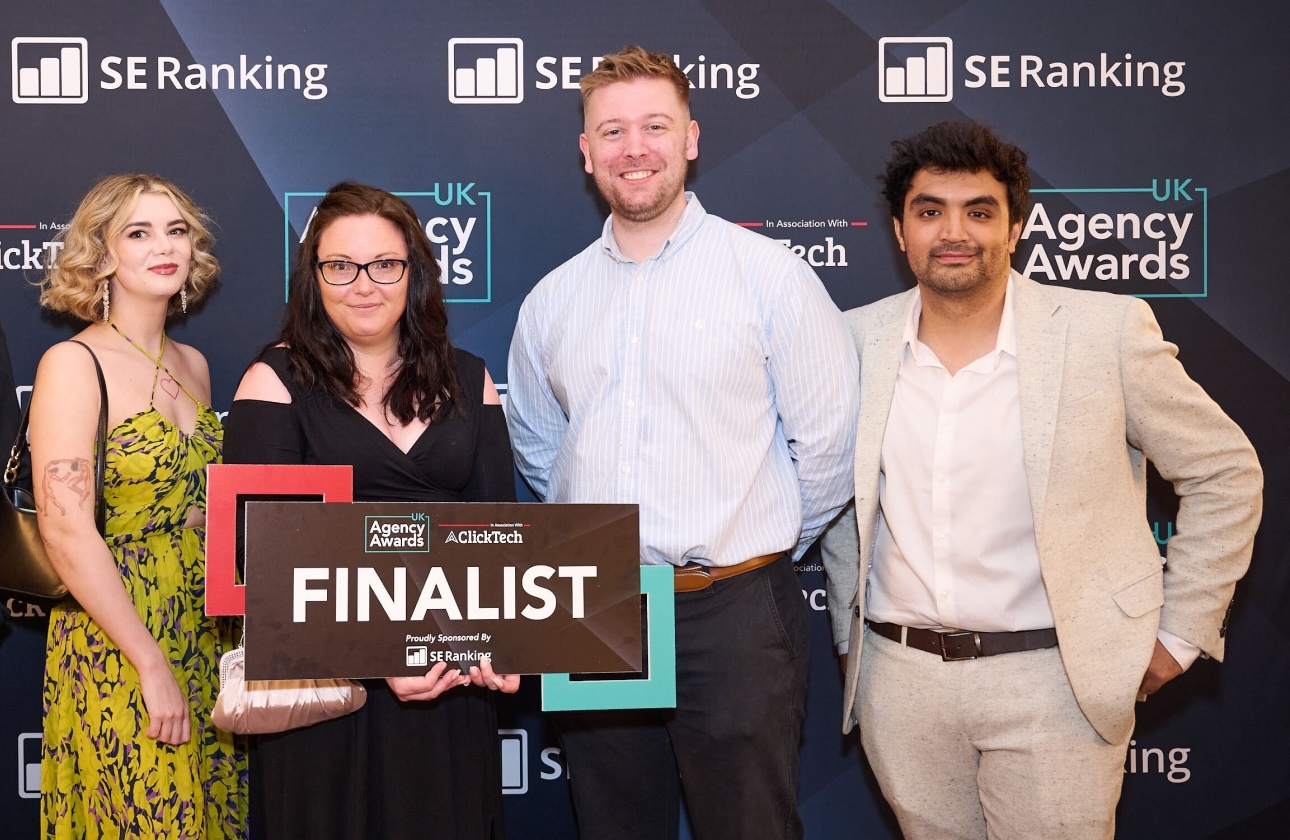
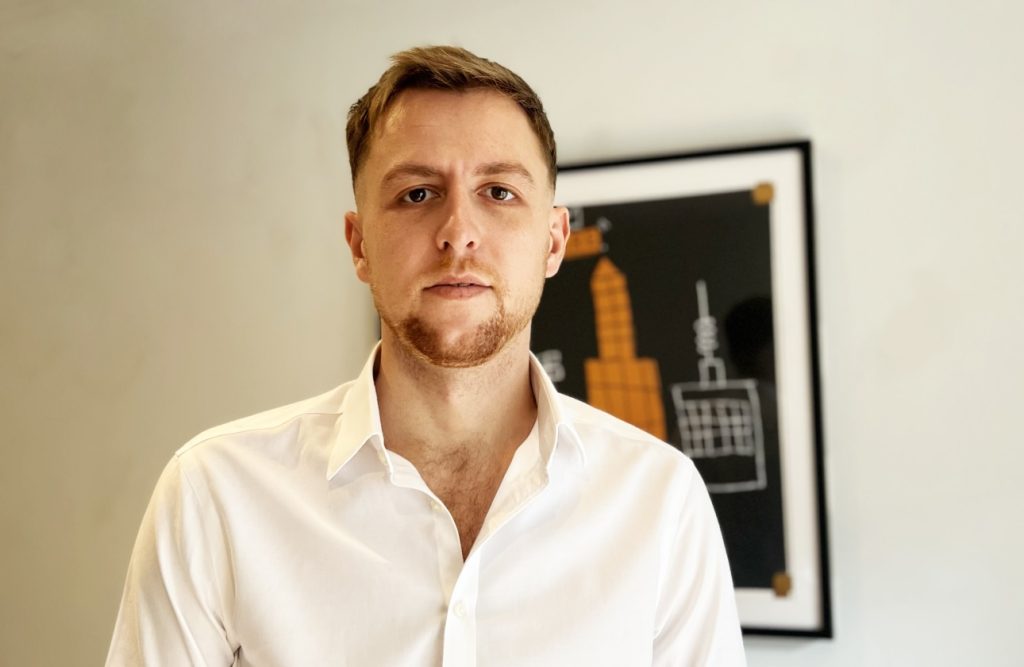
By Alfie Dawson, Founder & Executive Creative Director, Bordeaux & Burgundy
Bordeaux & Burgundy has been shortlisted for B2B Agency of the Year (small) at the UK Agency Awards 2026. I’m proud of the team that got us here. Over the past year we changed a lot about how the agency works, and seeing that recognised is a very good feeling.
I’ll explain what we entered, then make an argument our industry needs to hear: enterprise clients are starting to hire small agencies on purpose, and the agencies that understand why will grow fastest.
What our first client taught us
Bordeaux & Burgundy’s early years were shaped by Armis, a global cybersecurity firm. Their marketing teams sent us a constant stream of campaign briefs and a team of ten delivered them at scale for years. In 2026, ServiceNow acquired Armis for $7.75 billion.
The obvious move would have been to go looking for more relationships like it. Every agency wants high-value accounts. But very few businesses have an internal marketing operation that generates that volume of work.
The lesson we took was different. A global company had relied on a small agency for a very long time, and capacity was never the reason. The content was consistently good and we understood their buyers. So we made that the whole offer, for businesses without Armis’s internal machine. Content became the foundation of everything. We rebuilt delivery around senior specialists who own the work, and we now contribute to the thinking before a brief arrives.
Since then the client base has broadened into healthtech, fintech, proptech, agritech and AI, and the team has grown from ten people to sixteen.
The work we entered
Three engagements sit at the centre of our entry for Agency of the Year (small). They share a habit: find the thing most likely to limit performance and start there, even when it isn’t in the brief.
One client, a US healthtech backed by a16z, had a target account list and no reliable way to prioritise it. Before any campaign work, we rebuilt the CRM and created a live account-health model across 200+ accounts. That foundation now carries a full content programme and paid activity that has turned $46,198 of spend into an $80,000 closed deal and $300,000 in pipeline.
A cybersecurity firm had ambitious pipeline targets and fragmented attribution. We built a content-led GTM roadmap and repaired the reporting so decisions reflect qualified progression, and turned their IndyCar sponsorship into an always-on demand platform. The latest 30-day window generated 450+ leads at a $98.46 cost per lead.
Another cybersec SaaS asked for a 35-page fraud benchmark report. We designed it as a commercial asset built to power six to twelve months of GTM activity, and its visual system went on to shape their website.
Clients stopped asking how big we are
When we started four years ago, the first question from a prospect was headcount. A team of ten counted against us more than once. Today, on the same calls, clients ask how much we can deliver within our specialism and what results it produces. Nobody asks how big we are.
Three things changed.
First, enterprise marketing teams have built generalist capacity in-house. What they can’t hire quickly is someone who has already solved their specific problem in their specific market. A large agency can cover a lot of ground. A small specialist has usually walked the exact patch of it you need, and that is harder to find.
IPA and Tracksuit found that 83% of clients value “stretch and growth thinking” from their agencies, while only 48% believe they receive it. That gap is where small agencies will thrive.
Second, technology closed the production gap. The hands that justified a hundred-person agency are no longer the constraint, so size stopped being a proxy for capability.
Third, the risk argument reversed. Enterprise clients have learnt the hard way that the senior team in the pitch is rarely the team on the account. With us, the people who make the recommendation do the work. Conor Coughlan, CMO at Armis, described us as a true extension of his team. That only happens when a client talks directly to the strategist, the coordinator and the person actually doing the work
Agencies will be hired for the markets and models they know
Any half-competent team can use AI to produce a pitch that sounds informed. Clients know this. What they want on a first call is what you have achieved for a business with a similar model or in a comparable market.
Working repeatedly with businesses that share common ground means we know the playbooks to run, and when circumstances call for a different one. That knowledge never appears in five-step marketing guides, which is exactly why it’s worth paying for.
Agencies will price their judgement
Most of us have felt this. Technology shortens delivery times, and if you bill by the hour you do the same work faster and earn less for it. The expertise is worth more every year. The invoice is worth less.
WFA and MediaSense found that brands expect to pay more for strategic and technical talent and less for commoditised work. We have never priced by the hour, and I’d encourage other small agencies to stop. Set fees for judgement and specialist knowledge, independently of delivery time, then prove the value in results. Our strategic and technical capability is what clients compare when they weigh proposals. It should be what they pay for.
Build the AI stack the way you build the agency
We have been developing our own intelligence tools for a couple of years, and we made the mistake almost everyone makes: we tried to build one thing that did everything. It did everything to an average standard, which is useless in a specialist agency.
What works is the principle we apply to the business. Do a specific number of things exceptionally well. Five tools that remove your most painful workflow moments, tuned to your standards and your clients’ context, are worth more than one tool that tries to replace a department. Ours draw on the client knowledge we hold in Notion and Slack, with the aim to give specialists more room to think.
What the shortlist means to us
The endorsement I value most came from our private equity firms, where we’re a recommended partner. They now send portfolio companies to us when a B2B software business needs its marketing diagnosed and rebuilt. They’ve watched us solve the same kind of problem, in the same kind of business, more than once. That is what earns a referral.
For a small team that has spent a year rebuilding how it works, that matters a great deal.
Writing the entry meant putting a year of change into a thousand words. Reading it back, we realised how far the team had come. The shortlist is confirmation that other people can see it too.
Find out more at bordeauxandburgundy.com and follow Bordeaux & Burgundy on LinkedIn.